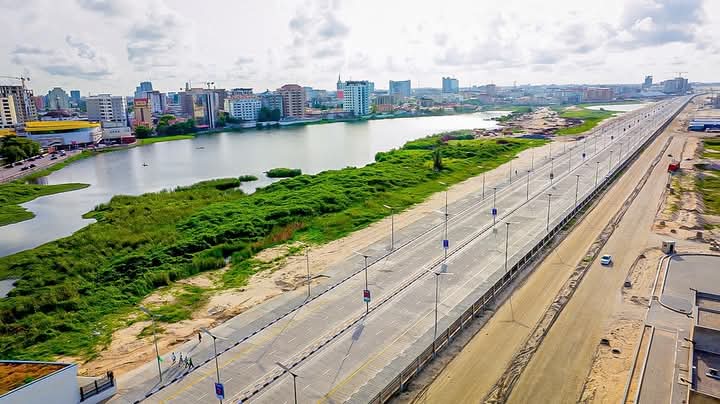
— Group Cites Colonial-Era Plans, Warns Against Marginalizing Coastal Communities
The Pan-Yoruba socio-political group, Afenifere, has expressed strong opposition to the Federal Government’s decision to alter the alignment of the Lagos-Calabar Coastal Highway, warning that the deviation from its original coastal path disregards historical precedence and undermines economic opportunities for oil-producing communities.
Speaking to journalists in Akure, the Ondo State capital, Afenifere Secretary General, Chief Sola Ebiseni, described the new route as “problematic” and “inconsistent with earlier proposals,” asserting that it is “unacceptable to the people of Ondo and other coastal states.”
Ebiseni emphasized the project’s deep historical roots:
“We have archival records showing that the Lagos-Calabar Coastal Highway was proposed as far back as 1900 when the Ilaje coastal territory of present-day Ondo State was still part of the Lagos Colony,” he said.
“A telegraphic line had already connected Lagos through Ilaje to Warri along the Atlantic corridor.”
He further cited a colonial document to reinforce the original coastal alignment:
“There was a colonial agreement signed in January 1904 between Sir William Macgregor, then Governor of Lagos Colony, and Sir Wyndham Roseberry of the Southern Protectorate, which outlined the coastal alignment of the route.”
While acknowledging President Bola Tinubu’s role in pushing the current phase of the project forward, Ebiseni cautioned against rerouting the highway away from coastal regions, especially in states with oil-producing communities:
“There is growing concern following statements by the Minister of Works suggesting the road would no longer follow the coastline from Ondo to Delta and other states. This raises questions and dissatisfaction among communities along the original alignment.”
He also stressed the importance of coastal inclusion in the project’s benefits:
“Many of the advantages associated with the project — including economic opportunities — lie within the undeveloped coastal regions outside Lagos.”
Calling for a focus on equitable development over politics, he added:
“It is in the best interest of the administration to pursue a legacy-driven approach, prioritizing equitable development over political considerations.”
Ebiseni also commended civic engagement efforts, specifically referencing a recent visit to the road project by activist Reno Omokri:
“Reno Omokri’s fact-finding tour of the road project is a more constructive form of civic engagement than what I term unproductive rhetoric.”
Turning to internal matters within Afenifere, Ebiseni highlighted the emergence of Oba Oladipo Olaitan of Osun State as a unifying development:
“From Chief Obafemi Awolowo in 1951 through Chief Michael Ajasin, Abraham Adesanya, Reuben Fasoranti, and Ayo Adebanjo, leadership had alternated primarily between Lagos/Ogun and Ondo/Ekiti zones. The current leadership from the Oyo/Osun axis represents a natural progression.”
On the possibility of reconciliation among the group’s factions, he remained optimistic:
“There has always been ideological contestation within the group, reflecting the dynamics of national politics. The current disagreements are, in my view, not irreconcilable.”
He concluded by reaffirming his confidence in the organization’s new leadership:
“Afenifere remains grounded in its welfarist and ideological roots. I believe the current leadership has the capacity to unify the group and navigate the current internal challenges.”