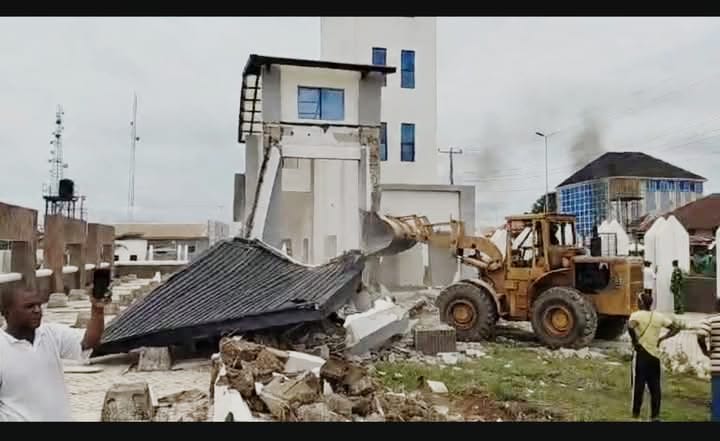
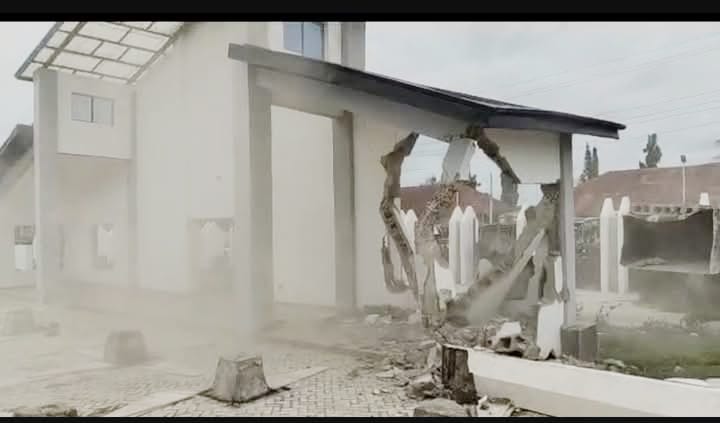
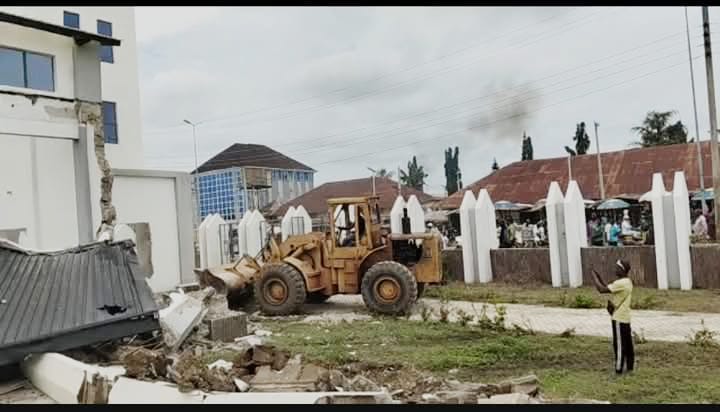
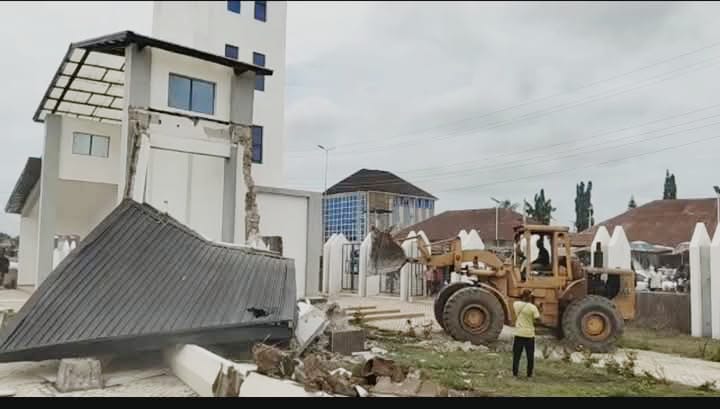
Tensions reached a breaking point in Owo on Saturday as dismantled a cenotaph erected to honor the victims of the tragic June 5, 2022 church massacre was Demolished.
The monument, located near the palace of the Olowo of Owo, had become the center of growing controversy within the community.
Though intended by former governor Oluwarotimi Akeredolu as a solemn tribute to those who lost their lives during the St. Francis Catholic Church attack, the memorial quickly became a flashpoint for cultural and spiritual discord.
It was gathered that critics—including high-ranking traditional chiefs and local elders— had voiced strong opposition, citing Yoruba customs that prohibit monarchs from regularly encountering symbols of death.
It was also gathered that the ondo State government ordered the demolition directive based on the complaints about the cenotaph.
A source close to the palace of Olowo of Owo Oba Ajibade Gbadegesin Ogunoye III said the monarch was opposed to the memorial Park when it was being proposed but the former governor turned down his objection.
“A Cultural Misstep”
Similarly, traditional leaders argued that the cenotaph’s positioning directly in the line of sight of the Olowo’s palace was not only insensitive but taboo.
According to Yoruba beliefs, constant proximity to a symbol of mourning—especially for a reigning monarch—is considered spiritually inappropriate and potentially dangerous.
“This was not an act of rebellion,” said a local community elder who asked not to be named. “It was a correction of cultural disrespect. No one opposed the remembrance— only the location.”
On Saturday the people woke up to see bulldozer demolishing the Cenotaph.
Oba Ajibade Gbadegesin Ogunoye III, the Olowo of Owo, had publicly acknowledged the tension the memorial had created. In a previous statement, he confirmed that while the town mourned deeply, tradition could not be ignored.
Government takes Action
On Saturday morning, a live Facebook video surfaced in which a bulldozer was seeing dismantling the structure peacefully.
“They used wisdom to channel their grievances,” said one eyewitness. “There was no violence, just a firm message.”
As of the time this report was filed, it remains unclear who, if anyone, officially authorized the demolition. State government is yet to release a formal statement.
Efforts to reach the Special Adviser to Governor Lucky Aiyedatiwa on Infrastructure, Lands, and Housing, Engr. Olawoye Abiola was unsuccessful as he didn’t pick his calls nor replied to Whatsapp messages sent to his Mobile phone.
The Chief Press Secretary to the Governor Lucky Aiyedatiwa, Prince Ebenezer Adeniyan, confirmed that demolition was carried out by the government on the request of the palace of the Olowo of Owo.
Adeniyan said, “It was a special request from the palace of the Olowo as it is said to be against the culture and tradition to site such near the palace. Another one will be built by the government.”
The cenotaph’s removal underscores a deeper challenge: navigating the intersection of modern memory and ancestral tradition. As Owo reckons with its grief, the community is also redefining how to honor its dead—without offending the living.
Whether the government can strike this balance remains to be seen.