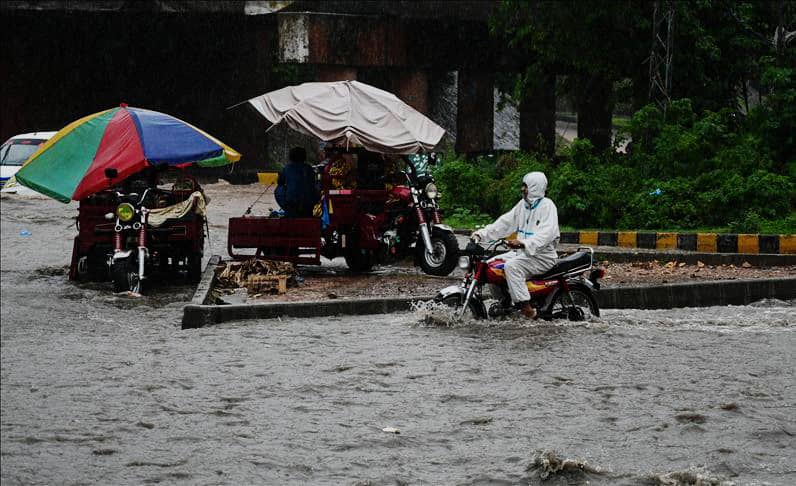
The Nigerian Meteorological Agency (NiMet) has issued a stark warning to Nigerians, urging the public to prepare for more extreme weather events and unpredictable climate patterns that continue to endanger lives and livelihoods across the nation.
The warning was delivered during a one-day sensitization forum held in Abuja on Tuesday, targeting journalists and civil society organisations.
NiMet’s Director-General, Professor Charles Anosike, did not mince words in describing the gravity of the situation and the critical role of the media in preventing climate-related disasters.
“Our effectiveness as an agency hinges not only on accurate forecasts but on how well this information is communicated to the public,” Anosike stressed.
“The media plays a vital role in translating complex meteorological data into accessible and actionable insights.”
He warned that Nigerians must urgently build resilience in the face of escalating climate threats, which are increasingly manifesting as devastating floods, prolonged droughts, and erratic rainfall.
“The urgency cannot be overstated,” Anosike said. “We need a nation that is well-informed, prepared, and resilient against the impacts of climate change.”
The forum, organized by NiMet, was designed to foster collaboration between the agency and key stakeholders to ensure the timely and effective dissemination of critical weather information.
In a no-nonsense tone, Anosike urged media professionals and civil society actors to engage actively and question meteorological data, emphasizing that public awareness is not just a luxury but a life-saving necessity.
Climate Collapse Looms Over River Basins: NiMet Links Deadly Floods to Rising Temperatures
In a related and deeply concerning development, NiMet is intensifying collaboration with the Anambra-Imo River Basin Development Authority (AIRBDA) to combat worsening threats posed by climate change on Nigeria’s fragile river systems.
During a courtesy visit by the Managing Director/CEO of AIRBDA, Rt. Hon. Emeka Nduka, to NiMet headquarters in Abuja, Anosike revealed how shifting rainfall patterns and soaring temperatures are wreaking havoc on the country’s river basin hydrology.
He warned that the consequences are already evident in the rising frequency of destructive floods and prolonged droughts that are undermining food security and infrastructure nationwide.
“Meteorological elements such as rainfall and temperature directly influence a river basin’s hydrological behaviour,” Anosike explained.
“Equally, the physical characteristics of river basins can shape local weather and climate patterns.”
This revelation comes as experts express alarm over the federal government’s slow response to strengthening the nation’s weather monitoring and disaster response infrastructure.
NiMet Battles Internal Challenges Amid Public Expectation
Despite the mounting pressure, Prof. Anosike assured stakeholders that NiMet is undergoing key internal reforms aimed at improving its service delivery.
These include comprehensive staff training programs and better welfare packages for personnel—measures the agency hopes will translate into more reliable weather and climate information for the Nigerian public.
Whether these reforms will be enough in the face of worsening environmental threats remains a question, but for now, NiMet is making it clear: the storm is already here, and only a fully informed and engaged nation stands a chance.