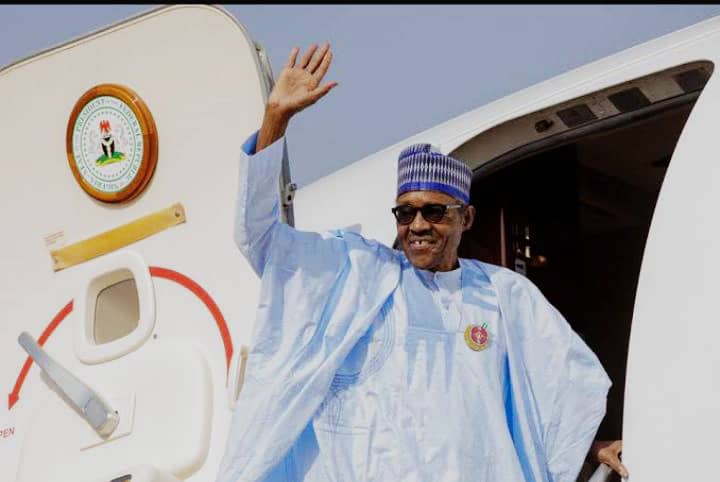
Eight years after Muhammadu Buhari took office with promises of “change”, Nigerians are still arguing over whether he brought progress or pain.
His tenure was marred by insecurity, inflation, ethnic mistrust, and a battered economy. But underneath the anger lies a complex record — one that many citizens have either forgotten or refused to acknowledge.
Was Buhari a failed leader? Possibly. But was he without achievement? Absolutely not.
INFRASTRUCTURE — A QUIET REVOLUTION
From the completion of the Abuja-Kaduna and Lagos-Ibadan railways to the long-delayed Second Niger Bridge, Buhari’s government oversaw one of the most aggressive federal infrastructure pushes in recent history.
Over 13,000 kilometers of roads were touched, many through innovative Sukuk financing. These weren’t PowerPoint projects — they were visible, drivable, functional.
Yet, because hardship remained high, Nigerians dismissed them.
AGRICULTURE AND FOOD SECURITY —MISUNDERSTOOD GAINS
The Anchor Borrowers Programme empowered over 2.5 million smallholder farmers. Rice production increased so much that imported foreign rice largely disappeared from local markets.
But Nigerians, who rightly expect affordable food, saw inflation instead. So they blamed Buhari — forgetting global supply chain disruptions, COVID-19, and local insecurity.
The question remains: was it poor policy, or poor perception?
POWER REFORMS AND MISSED PRAISE
Few noticed when Buhari struck a major power sector deal with Siemens to modernize the national grid.
Even fewer knew when solar power mini-grids lit up 37 federal institutions. Mass metering ended crazy estimated bills for millions.
Still, the average Nigerian household didn’t feel the electricity. The anger drowned out the reform.
Perhaps Buhari’s real mistake was promising light when darkness still loomed.
THE SOCIAL INVESTMENT NOBODY TALKS ABOUT
N-Power gave jobs to hundreds of thousands. MarketMoni and TraderMoni reached petty traders. The School Feeding Programme served millions of pupils.
Nigeria’s social investment under Buhari was the largest on the continent.
Yet elites mocked it as “stomach infrastructure”, and others believed it was political patronage. Whatever its faults, it helped lift many temporarily — and laid a foundation for more.
PETROLEUM INDUSTRY ACT: A REFORM 20YEARS IN WAITING
No president before him had the political will to pass the Petroleum Industry Bill. Buhari did.
He also discovered oil in the north (Kolmani Basin), completed gas infrastructure like the AKK pipeline, and repositioned Nigeria in the global energy market.
But fuel scarcity and subsidy drama consumed public attention, and any applause was lost.
MILITARY MODERNIZATION AND SECURITYIRONIES
Yes, insecurity worsened in many parts of Nigeria. But Boko Haram lost territory, and the Nigerian Air Force received its first modern jets in decades.
Super Tucanos, drones, and armored vehicles were acquired. The military was retooled. Was it enough? No. But was it nothing? Also no.
The bigger question: did state governments complement federal efforts? Or were they quick to shift blame?
ELECTORAL REFORMS THAT HURT HIS PARTY
Perhaps Buhari’s most patriotic act was signing the Electoral Act 2022. It introduced BVAS and real-time transmission of results — tools that helped opposition candidates in key states.
A sitting president willing to sign a law that weakens his party’s grip? That’s rare in Africa.
Unfortunately, most Nigerians didn’t see the bigger picture — only the messiness of the elections.
FINAL THOUGHTS
It is fair to criticize Buhari for the things he did wrong: his sluggish response to some crises, poor communication, rising debt, fuel woes, and the failure to truly unite the nation. But it is equally fair — and perhaps overdue — to acknowledge what he did right.
History should be honest, not emotional. We may not miss Buhari, but we must not erase his strides.
After all, even in disappointment, truth must survive.
By Roving Reporters Editorial Board