••• Political, Cultural, Moral Storm Brews as Akeredolu’s Monument demolished for Shopping Complex
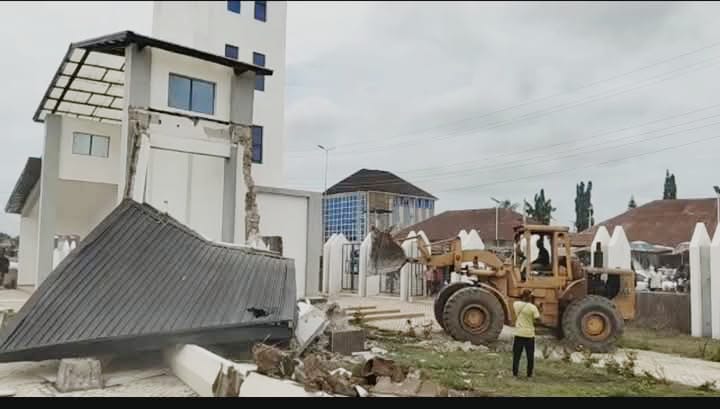
A storm of controversy has erupted in Ondo State following the demolition of the Owo Memorial Park, a monument built by the late Governor Oluwarotimi Akeredolu in memory of victims of the 2022 St. Francis Catholic Church massacre.
The structure, which once stood solemnly as a tribute to the slain worshippers, has now become a flashpoint for political, cultural, and emotional conflict.
Prominent voices from across the state are sharply divided over the decision, spearheaded by the Olowo-in-Council and endorsed by the administration of Governor Lucky Aiyedatiwa.
Former House of Representatives member, Prince Mike Omogbehin, condemned the demolition as a betrayal of the town’s legacy.
“An Owo man built a memorial park in Owo, and some Owo people talked an Ilaje man into demolishing it. What a tragedy,” he said, criticizing Governor Aiyedatiwa for allegedly meddling in the local politics of a town he doesn’t fully understand.
“All politics is local. The quality of advisers around Aiyedatiwa is suspicious,” he added.
In contrast, Olufemi Omosuwa Mayor, a former chairman of Owo local government, praised the demolition as a necessary act of cultural preservation.
“It is mendacious, obnoxious, and sacrilegious to have erected a structure that constantly reminds the king of the dead,” he argued, commending the Olowo of Owo, Oba Ajibade Gbadegesin Ogunoye, for rejecting the project even during Akeredolu’s lifetime.
Adding weight to the traditionalist stance, Abass Obayoriju, an indigene of Owo, recounted firsthand knowledge of the events leading up to the structure’s installation.
He asserted that the late governor had failed to consult with the Olowo and had ignored warnings about the sacredness of the location.
“Kabiyesi made his position clear. That area is near the palace and holds traditional significance,” he said.
However, the widow of the late governor, Mrs. Betty Anyanwu-Akeredolu, issued a scathing rebuke of the demolition, calling it “a desecration of sacred ground” and “an act of profound insensitivity.”
In a passionate statement, she said, “That monument symbolized collective mourning, remembrance, and healing. To now dismiss it as having ‘no economic value’ and replace it with a shopping complex shows moral bankruptcy.”
She further criticized the move as an insult to the victims, their families, and her late husband’s legacy. “A world-class society does not erase its pain to make way for profit,” she lamented.
As bulldozers clear the site for what will be a “world-class shopping complex,” as gathered, the soul of Owo remains torn between tradition, remembrance, and the march of development.
Whether the action represents bold leadership or a grave misjudgment remains a matter of heated public debate.