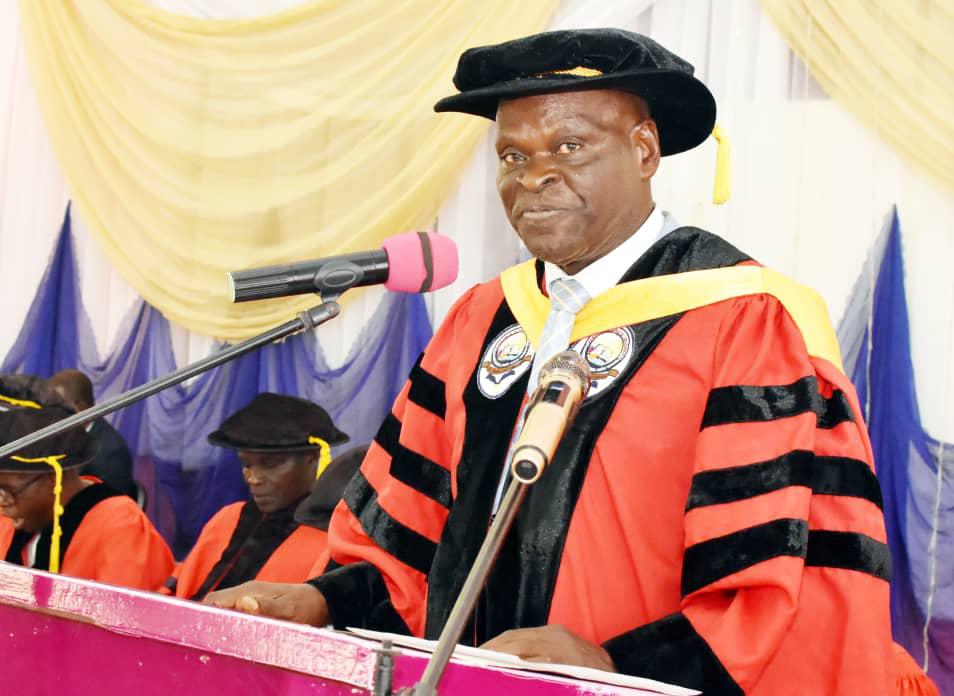
A Professor of Theoretical Physics at Adekunle Ajasin University, Akungba Akoko (AAUA), Prof. Dele Abajingin, has called on the Federal Government and relevant stakeholders to intensify investments in research and innovation aimed at developing alternative therapies for malaria, Nigeria’s most deadly disease.
He made the call while delivering the 51st Inaugural Lecture of the university on Tuesday, November 25, 2025, titled “A Low-Value Alternating Electromagnetic Field for Malaria Therapy: A New Dance Step to the Same Old Drummer.”
Prof. Abajingin argued that conventional approaches to malaria prevention and treatment have failed to significantly reduce the disease burden, as parasites continue to develop resistance to existing drugs, while cases of anaemia and other haematological complications remain prevalent.
Describing malaria as a major global health challenge, he noted that the disease accounts for over one million deaths annually, with more than 300 million acute cases recorded each year, especially among children.
He explained that beyond common symptoms such as fever, chills and headaches, malaria can lead to fatal anaemia, organ damage, cerebral complications and death if not properly treated.
The physicist detailed the disease mechanism, explaining that when an infected mosquito bites, it injects the Plasmodium parasite into the bloodstream, where it attacks red blood cells and breaks down haemoglobin into hemes and globin.
The hemes are then converted into haemozoin, a process that creates a less toxic environment favourable for parasite survival.
According to him, his research demonstrated that exposure to an Oscillating Magnetic Field (OMF) generated with a Helmholtz coil could reverse haemozoin back to hemes, thereby creating a toxic environment for the parasites.
This, he said, resulted in a reduction in parasitic density and a corresponding increase in red blood cell volume.
“The focus of malaria therapy should be on breaking down haemozoin into hemes, thereby making the environment hostile for the parasite. Our findings indicate that oscillating magnetic fields can effectively achieve this,” he stated.
Prof. Abajingin revealed that the projected application of this innovation would be in the form of a specially designed wearable device, named the ‘Helmholtz Jacket’, envisioned as a unisex electronic suit for therapeutic use.
He further lamented the widespread adulteration of antimalarial drugs and the rising rate of parasite resistance, stressing the urgency for complementary treatment approaches such as electromagnetic field therapy.
“Nigeria must move beyond the one-size-fits-all drug model. There is a need for infrastructure that supports interdisciplinary research, biomedical engineering collaboration, and proper regulatory frameworks to bring such innovations from the laboratory to real-world application,” he said.
The professor also underscored the importance of empowering young Nigerians, urging universities to establish departments of Applied Electronics to produce graduates capable of developing and operating cutting-edge medical technologies.
In his remarks, the Vice Chancellor of AAUA, Prof. Olugbenga Ige, described inaugural lectures as intellectual platforms where professors showcase their lifetime contributions to global knowledge.
He commended Prof. Abajingin for his dedication to academic excellence and for promoting research that addresses critical national challenges.