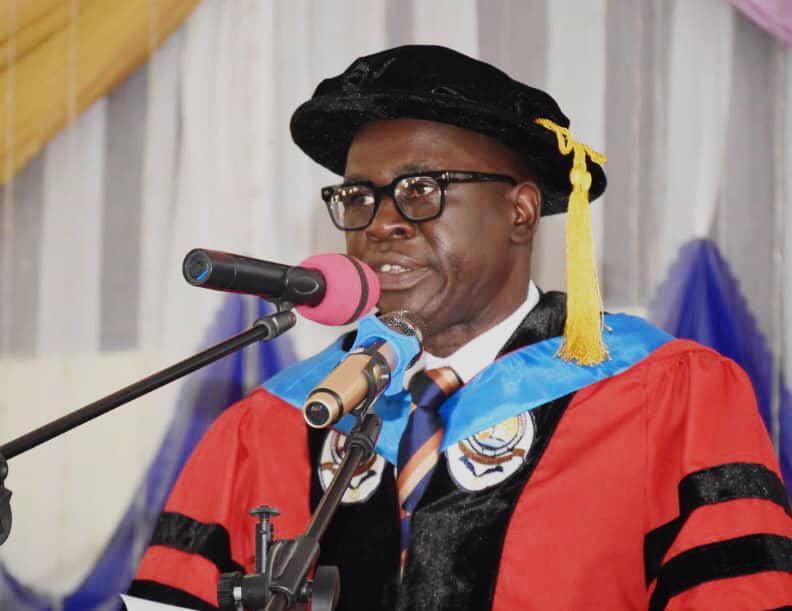
Adekunle Ajasin University, Akungba-Akoko, Ondo State, was the intellectual hub on Tuesday, July 29, 2025, as Professor Jude Akomolafe, a seasoned scholar of Counselling Psychology, delivered the university’s 44th Inaugural Lecture, warning that Nigeria’s progress is being sabotaged by poor job commitment and emotional disconnection in the workforce.
Titled “Did You Complete What You Started? The Tripartite Roles of Commitment, Predictors and Therapeutic Interventions”, the lecture was a bold call for institutional reforms and employee-centred policies to drive national growth.
Prof. Akomolafe argued that emotional intelligence and worker commitment are non-negotiable for any organisation—or country—that seeks to thrive.
“For an organisation to achieve its goals, workers must demonstrate high-level commitment. Productivity and competitiveness start with personnel who are motivated and emotionally balanced,” he stated.
He painted a troubling picture of the national workforce, declaring: “Lack of worker commitment is crippling multiple sectors of the economy. It’s one of the biggest threats to development today.”
Drawing from decades of research and field experience, the scholar identified emotional intelligence, self-efficacy, job satisfaction, and personality types as core psychological predictors of job commitment.
He called for mainstreaming therapeutic tools—especially Cognitive Behavioural Therapy (CBT)—to enhance motivation and accountability in the workplace.
“Therapeutic interventions have been proven effective in improving worker commitment across Nigeria,” he noted.
Prof. Akomolafe didn’t stop at diagnosis. He prescribed solutions, urging that counselling and organisational psychologists be part of recruitment teams to ensure better staff selection.
Ideal candidates, he said, should demonstrate personality traits like conscientiousness, agreeableness, and extraversion, while cautioning that individuals high in neuroticism or openness to distraction may struggle with long-term commitment.
He also advocated workplace justice and inclusive leadership. “Discipline should be measured and fair—after all, orí bíbẹ̀ kì í ṣe òògùn orí fìfọ (cutting off the head is not the cure for a headache),” he quipped in Yoruba, stressing the need for empathy in management.
To reverse the tide of low commitment, Akomolafe recommended: Regular training and retraining of staff, Involving workers in decision-making processes, Creating a work environment that fosters wellbeing and fairness.
“Workers perform better when they feel valued—not when they are constantly monitored or threatened,” he asserted.
In his remarks, the Vice Chancellor of the University, Prof. Olugbenga Ige, hailed Akomolafe’s contributions to psychology and academia, describing him as “a shining example of academic excellence in service to humanity.”
He praised the inaugural lecture for offering “practical, research-backed solutions to one of the country’s biggest productivity problems.”